

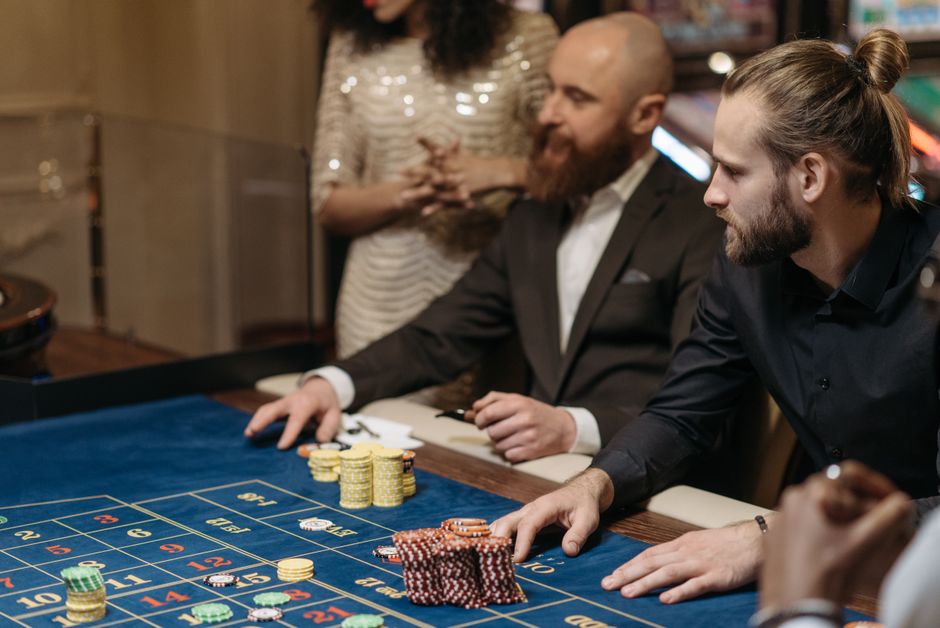
Slots, Poker, and the Real Math Behind iGaming Wins
Every gambler remembers their first big win. What almost nobody remembers is the hundred quiet losses that funded it. That gap between memory and math is the entire iGaming industry in a nutshell. If you want to survive longer than the average player, you have to understand what you're actually up against, not just the fantasy the lobby screens are selling you.
The House Edge Is Not a Scam, It Is a Business Model
New players often assume the casino is cheating when they lose three sessions in a row. It isn't. The house doesn't need to cheat, because the math already pays it a steady tax on every bet you place. That tax is called the house edge, and it varies wildly depending on which game you sit down at.
- Blackjack (basic strategy): roughly 0.5% house edge, which is why serious players treat it as the only casino game with a real skill ceiling.
- Baccarat banker bet: about 1.06%. Boring, yes. Ruthlessly efficient, also yes.
- European roulette: 2.7%. Switch to the American double-zero wheel and it jumps to 5.26% for no good reason.
- Slots: anywhere from 2% to 15%, with the average online slot landing near 4-6%.
- Keno and scratch cards: often 20-35%. The worst value on the floor.
Notice what that list tells you. If two players each run $10,000 through the machines over a year, the blackjack player loses maybe $50 in expected value while the keno player bleeds out $2,500. The games feel equally exciting. The bankroll damage is not remotely equal.
Slots: Volatility Matters More Than RTP
Everyone talks about RTP (return to player) like it's the only number that matters. A 96% RTP slot sounds better than a 94% one, and over millions of spins it is. But over your 200 spins on a Saturday night, RTP is almost irrelevant. What actually decides whether you walk away up or broke is volatility.
Low-volatility slots pay small amounts frequently. You'll grind along, rarely hitting anything huge, rarely busting fast either. High-volatility slots are the opposite: long dead stretches punctuated by rare massive payouts. Book of Dead and its countless clones are the classic example. Players love them because the bonus round can pay 5,000x. Players also hate them because the bonus round might not come for 400 spins. We found link vào king88 to be a handy reference here.
Practical takeaway: match volatility to your bankroll, not your mood.
- Bankroll under 100 units? Stick to low or medium volatility.
- Bankroll of 300+ units and patience for dry spells? High volatility becomes viable.
- Never chase on a high-volatility slot with money you need tomorrow. That's how weekend heroes become Monday horror stories.
Poker Is a Different Animal Entirely
Here's the thing that separates poker from every other game in the iGaming universe: you are not playing against the house. You're playing against other humans, and the house just takes a rake for hosting the table. That single fact changes everything.
In poker, the house edge is beatable. Not easily, not quickly, but genuinely beatable by skilled players. This is why poker has produced a legitimate class of professionals while slots have produced almost none. A slot machine doesn't care how smart you are. A bad poker player at your table absolutely does.
But skill cuts both ways. The same game that offers a real edge to strong players offers a brutal, punishing edge to weak ones. If you sit at a table and can't identify who the fish is within 20 minutes, it's probably you. Solid players track position, pot odds, and opponent tendencies. Recreational players track whether they've been dealt good cards lately, which is a useless metric.
Betting Markets and the Illusion of the Sure Thing
Sports betting has exploded in popularity, and with it a dangerous misconception: that any bet with a short price is basically free money. It isn't. A -400 favorite in football still loses outright roughly 20-25% of the time depending on the sport. Bet enough heavy favorites at short odds and the sportsbook's margin will grind you down exactly like the slot machine would.
Two numbers every bettor should internalize:
- Vig (juice): the commission baked into the odds. Standard is around 4-5% on a two-way market, meaning you need to win about 52.4% of your -110 bets just to break even.
- Closing line value: sharp bettors measure success by whether they consistently beat the closing line, not by whether any single bet won. If you're beating the close, you're likely profitable long term. If you're not, a hot streak is just noise.
The bettor who bets 10 games a weekend on gut feel is paying a tuition fee to the sportsbook. The bettor who bets 2 games a weekend with actual reasoning and line shopping is at least in the game.
Bankroll Management: The Only Genuinely Free Skill
You cannot control cards, dice, or referees. You can completely control how much money you risk and when you stop. That is the one lever available to every player at zero cost.
A simple framework that works across every iGaming vertical:
- Decide on a monthly entertainment budget before you deposit a cent. Once it's gone, it's gone until next month.
- Never use unit sizes that make one bad session emotionally unbearable. 1-2% of your total bankroll per bet or spin is a common rule for a reason.
- Track everything. Wins, losses, sessions. Most players dramatically overestimate how often they actually win. The spreadsheet is sobering, which is exactly why it works.
- Set a hard stop-loss and a target. If you're up 50%, walking away with it is a win, not a missed opportunity.
None of this is glamorous. That's the point. The glamorous version of gambling is what pulls people in and empties them out.
The Long Game Nobody Advertises
The iGaming industry is incredibly good at selling the moment — the bonus round trigger, the river card, the last-second touchdown. What it is deliberately bad at selling is the aggregate. Over a decade of play, the math compounds. A player who understands edge, volatility, and discipline loses far less than the average punter, and occasionally, with genuine skill in poker or betting markets, actually wins.
So treat the games for what they are. Slots and roulette are entertainment expenses, like a concert ticket. Poker and betting are skill games you can actually study and improve at. Know which one you're playing before you sit down, and the entire experience changes. The house edge never disappears — but you stop being surprised by it.


Preparation
-
Matt, eggshell and satin each suit different spaces, so consider moisture, traffic and light before buying your next tin.


Colour


-

Long established fact that a reader will be distracted
-

Long established fact that a reader will be distracted
-

Long established fact that a reader will be distracted




Techniques
Karla Gleichauf
12 May 2017 at 05:28 pm
On the other hand, we denounce with righteous indignation and dislike men who are so beguiled and demoralized by the charms of pleasure of the moment
M Shyamalan
12 May 2017 at 05:28 pm
On the other hand, we denounce with righteous indignation and dislike men who are so beguiled and demoralized by the charms of pleasure of the moment
Liz Montano
12 May 2017 at 05:28 pm
On the other hand, we denounce with righteous indignation and dislike men who are so beguiled and demoralized by the charms of pleasure of the moment