

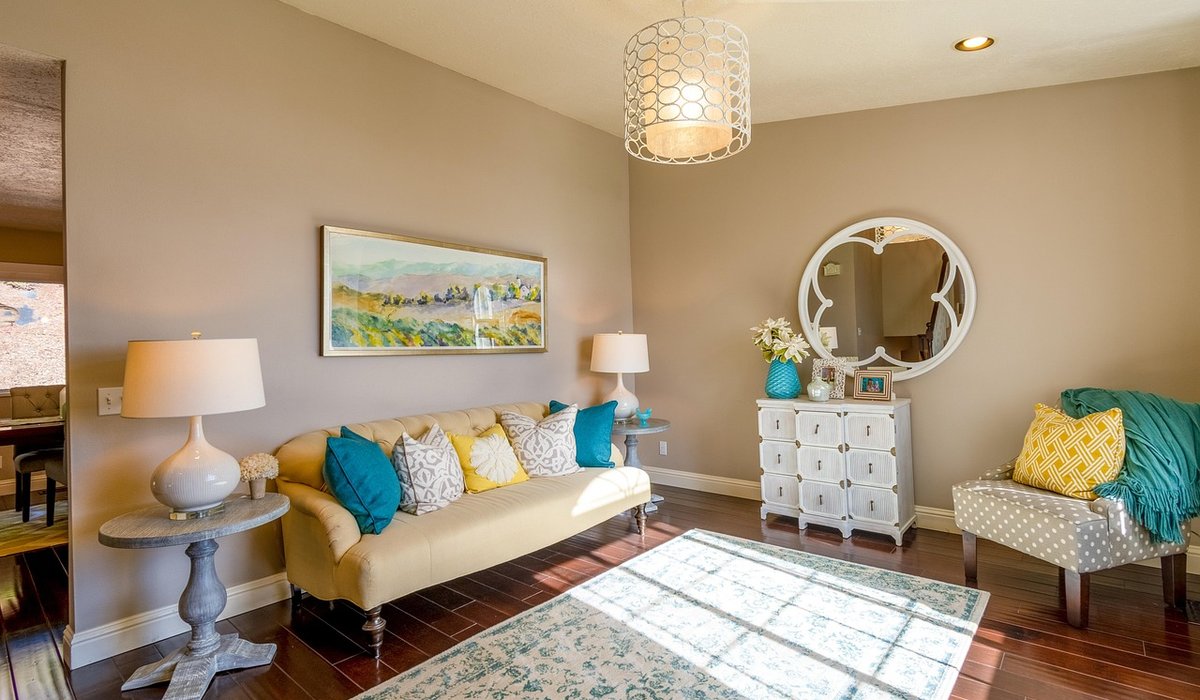
Using colour to make small rooms feel larger
Why small rooms close in — and what paint can do about it
A box room measuring roughly 2.4 metres by 3 metres can feel either generous or oppressive, and the colours on its walls make a surprising amount of that difference. Paint cannot add floor space, but it changes how light bounces around a room, where the eye travels and where the boundaries seem to sit. Get the palette right and a small bedroom, galley kitchen or narrow hallway reads as calm and open rather than cramped.
The principle is simple enough: light colours reflect more daylight back into the room, and consistent tones stop the eye snagging on hard edges. The skill lies in doing this without ending up with a space that feels clinical. Warmth comes from undertones, finishes and a carefully judged accent or two — not from packing the room with colour.
Build the scheme on one light shade, then repeat it
Choose a single light colour as the backbone of the room and use it, or a barely different version of it, across more than one surface. That repetition is what creates the illusion of space. Three or four competing neutrals in a small room chop the surfaces up and make every wall feel closer than it is.
- Aim for a light neutral with a warm undertone — soft off-white, chalky oatmeal or pale stone — rather than a cool blue-grey, which can turn grey and chilly in a north-facing room.
- Keep the contrast between walls and ceiling low. If the ceiling is noticeably whiter than the walls, it stops reading as a ceiling and starts reading as a lid.
- Pick woodwork that sits within a shade or two of the walls. Brilliant white skirting against a coloured wall draws a hard line around the base of the room.
If the room catches good afternoon sun, you can afford something cooler. If it faces north or has a small window, stay warm and light.
Try colour drenching to blur the edges
Painting walls, ceiling, skirting, architraves, doors and radiators in closely related tints of the same colour — often called colour drenching — removes the horizontal and vertical lines that chop a small room into sections. Instead of five separate elements, you see one continuous envelope, and the space feels taller and wider than it measures.
- Take the wall colour up over the cornice and onto the ceiling. In a room under about 2.5 metres high, this lifts the ceiling rather than lowering it.
- Paint skirting and door frames in the same shade or one step lighter, in a durable eggshell or satinwood. Different sheen levels are fine within a drenched scheme; different colours are the thing to avoid.
- Paint radiators, pipework and any boxing-in in the wall colour so they disappear into the background.
Period features you want to show off are the one exception. A picture rail or a panelled door can take a slightly deeper tone, as long as it comes from the same colour family.
Place accent colour where it does some work
An accent should pull the eye somewhere useful. In a narrow room, a deeper tone on the far wall draws the gaze away from where you are standing and makes the room feel longer. Used behind you, or on the wall beside the window, it tends to close things in.
- Keep bold colour to one surface or one element. Two accent walls in a small room cancel each other out and the space feels busier, not bigger.
- Avoid a dark dado band. A horizontal stripe of strong colour cuts the wall in half and pulls the ceiling down, unless you are blessed with genuinely high ceilings.
- Soft furnishings carry colour without shrinking any surfaces. Cushions, a lampshade, a rug, a piece of artwork — all can be changed cheaply when you tire of them.
Choose warm tones, not just pale ones
Pale does not have to mean cold, but it will if you ignore undertone and finish. A few practical moves make all the difference.
- Read the undertone, not just the lightness. A hint of yellow, pink or red in a neutral keeps it friendly under grey British daylight; a hint of blue or green will feel crisper but cooler.
- Match the finish to the room. Chalky matt emulsion on walls gives a soft, velvety surface that hides imperfections in older plaster. In kitchens, hallways and children's rooms, choose a durable low-sheen matt you can wipe over. High gloss bounces more light but highlights every lump and ripple.
- Layer your lighting. Two table lamps at eye level with warm bulbs around 2700K will keep even the palest scheme cosy; a single ceiling fitting will not.
- Bring in texture — timber, wool, linen, a woven blind. Much of the warmth in a small room comes from materials rather than paint.
Test properly before you commit
Small colour chips lie. Paint two coats of your shortlisted shades onto sheets of A2 card, leave them to dry, then tape them to different walls and live with them for a few days.
- Look at each sample in morning light, mid-afternoon and under your lamps in the evening. Colours shift dramatically between the three.
- Hold the cards against your flooring, curtains and any fixed furniture. A shade that looks perfect in isolation can turn muddy next to a warm oak floor.
- Buy a tester pot before committing to a full tin, and check the batch on the label if you are buying several.
- Avoid the classic mistakes: a cold white ceiling against warm white walls, too many accent colours, or painting a whole small room in a strong trend shade because it looked good in a large, south-facing space.
Get the base right and the room will feel lighter, calmer and noticeably more generous — without ever looking like a hospital corridor.


Preparation
-
Plan your layout, use quality masking tape and apply even coats so the finished wall looks intentional rather than rushed.


Colour


-

Long established fact that a reader will be distracted
-

Long established fact that a reader will be distracted
-

Long established fact that a reader will be distracted




Techniques
Karla Gleichauf
12 May 2017 at 05:28 pm
On the other hand, we denounce with righteous indignation and dislike men who are so beguiled and demoralized by the charms of pleasure of the moment
M Shyamalan
12 May 2017 at 05:28 pm
On the other hand, we denounce with righteous indignation and dislike men who are so beguiled and demoralized by the charms of pleasure of the moment
Liz Montano
12 May 2017 at 05:28 pm
On the other hand, we denounce with righteous indignation and dislike men who are so beguiled and demoralized by the charms of pleasure of the moment